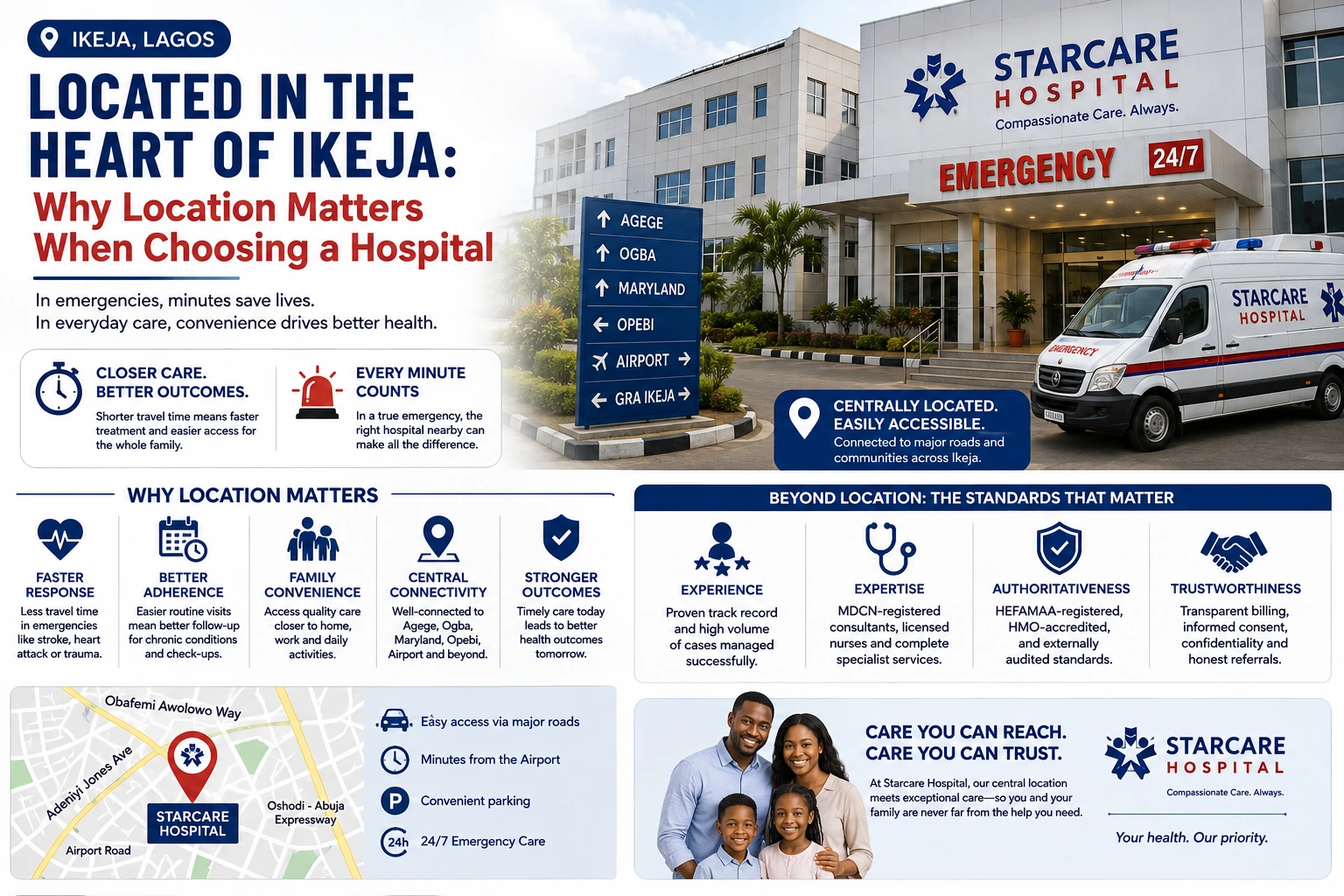
Located in the Heart of Ikeja: Why Location Matters When Choosing a Hospital
When it comes to healthcare, location can make a life-saving difference. In Lagos, heavy traffic can turn a short journey into a significant delay, especially during medical emergencies. A conveniently located hospital also makes routine check-ups, antenatal visits, and chronic disease management easier to maintain. This blog explores why hospital proximity matters, how Ikeja's central location benefits families and commuters, and what to consider beyond distance — including qualified medical professionals, proper licensing, emergency readiness, on-site diagnostics, and transparent billing. Discover how Starcare Hospital combines its central Ikeja location with consultant-led care, diagnostic services, and round-the-clock emergency support to make healthcare more accessible to families across Lagos.
Choosing the right hospital is about more than finding doctors, medical equipment, or available treatments. Location also plays an important role in the quality and convenience of care a patient receives. For individuals and families seeking dependable healthcare in Ikeja, choosing a centrally located facility can make appointments, emergency visits, follow-ups, and long-term treatment easier to manage.
Starcare Hospital is positioned to serve patients who need accessible, patient-focused medical support in Located in the Heart of Ikeja. A hospital located close to residential areas, workplaces, major roads, and transport routes can reduce delays and remove some of the stress that often comes with seeking medical care. This is especially important in a busy city such as Lagos, where travel time and traffic can affect how quickly someone receives attention.
The Importance of Hospital Location
A hospital’s location can influence how consistently patients attend appointments and how quickly they can access medical help. When a healthcare facility is difficult to reach, patients may postpone routine check-ups, skip follow-up consultations, or delay treatment until a health concern becomes more serious.
For families looking for healthcare services in Ikeja, proximity can provide peace of mind. Parents may need quick access to medical care for children, working professionals may need flexible appointment access, and older adults may benefit from avoiding long and tiring travel. A centrally located hospital helps make healthcare part of everyday life rather than a difficult journey.
At Starcare Hospital, accessibility supports a smoother patient experience from the first consultation through recovery and follow-up care.
Convenient Healthcare in Ikeja for Families
Ikeja is a major business and residential area in Lagos. It attracts professionals, families, visitors, and businesses every day. With so many people moving through the area, convenient access to reliable medical support is essential.
A hospital in the heart of Ikeja may be easier to reach from nearby homes, offices, schools, hotels, and commercial locations. This matters when patients need to schedule a consultation before work, seek care after school hours, or visit a loved one receiving treatment.
Accessible healthcare in Ikeja can also encourage preventive care. Rather than waiting for symptoms to become severe, patients may be more likely to book routine health checks, speak with a doctor about early concerns, and follow medical advice when the facility is close by.
Faster Access During Urgent Situations
In urgent health situations, every minute can feel important. Although not every medical issue is an emergency, quick access to professional medical assessment can help patients receive timely advice and appropriate care.
A conveniently located hospital may reduce the time needed to reach medical professionals when someone experiences sudden symptoms, injuries, high fever, severe pain, or other concerning health changes. For residents and workers in the area, choosing a hospital nearby can make it easier to act promptly rather than spending additional time travelling across the city.
Starcare Hospital provides an accessible option for patients seeking medical services in Lagos without the added burden of travelling far from Ikeja. Patients should always contact emergency services or visit the nearest appropriate emergency facility for life-threatening symptoms.
Reducing Stress for Patients and Caregivers
Illness can be emotionally and physically demanding. The last thing a patient or caregiver needs is a long, uncertain trip through heavy traffic. Location can reduce stress by making it easier for family members to accompany patients, attend consultations, collect prescriptions, and visit during treatment.
For caregivers, a nearby hospital means less time spent arranging transport and more time available to support the person receiving care. This can be particularly valuable for families managing chronic conditions, maternity care, paediatric needs, recovery after procedures, or regular specialist consultations.
With accessible healthcare services in Ikeja, patients can focus more on their wellbeing and less on the practical challenges of reaching a medical facility.
Supporting Regular Check-Ups and Preventive Care
Preventive care is one of the most practical ways to protect long-term health. Regular consultations may help people monitor blood pressure, blood sugar, nutrition, reproductive health, child development, and other health needs. However, preventive care only works when patients can access it consistently.
A hospital located near where patients live or work can make routine medical visits more manageable. Patients are more likely to attend scheduled appointments when the facility fits naturally into their daily routine. This is why convenient healthcare in Ikeja can support healthier habits over time.
At Starcare Hospital, patients can seek medical guidance for concerns before they become more complicated. A qualified healthcare professional can assess symptoms, recommend tests where necessary, explain treatment options, and guide patients on the next appropriate step.
Accessibility for Working Professionals
Many people in Ikeja balance demanding work schedules, family responsibilities, and commuting. A hospital that is close to business districts and transport connections may help working professionals access care without losing an entire day to travel.
Whether someone needs a routine consultation, diagnostic support, follow-up care, or medical advice, a centrally located facility can make healthcare more practical. This is one reason patients consider location when comparing medical services in Lagos.
Choosing Starcare Hospital can help patients find medical support within Ikeja, making it easier to prioritise health alongside work and personal commitments.
Continuity of Care Matters
Healthcare is often not a one-time visit. Some patients need follow-up appointments, repeat tests, monitoring, prescriptions, or referrals. When the hospital is far away, attending these appointments may become difficult. Missed follow-ups can affect how well a condition is monitored and managed.
A nearby hospital makes continuity of care more realistic. Patients can return for consultations, discuss progress with their medical team, and ask questions as their treatment develops. For families seeking dependable healthcare services in Ikeja, this ongoing access can be as important as the first appointment.
Starcare Hospital aims to support patients with a professional, respectful approach that considers both immediate health concerns and ongoing care needs.
What to Consider When Choosing a Hospital
Location is important, but it should be considered alongside other factors. Before selecting a healthcare provider, patients may want to assess:
- The hospital’s location and ease of access from home or work.
- Availability of qualified healthcare professionals.
- Range of medical services offered.
- Cleanliness, patient safety practices, and communication standards.
- Availability of appointment scheduling and follow-up support.
- Whether the hospital can provide or arrange appropriate care for the patient’s needs.
- Patient reviews and the hospital’s reputation in the community.
A good hospital experience combines convenience, professional expertise, clear communication, and compassionate care. Starcare Hospital seeks to offer a reliable option for people looking for accessible healthcare in Ikeja.
Why Choose Starcare Hospital in Ikeja?
Starcare Hospital understands that patients need medical care that is both dependable and convenient. Being located in Ikeja can help patients and their families access consultations and medical support without unnecessary travel challenges.
Whether you are a resident, employee, business owner, parent, or visitor in the area, choosing a nearby hospital can make a meaningful difference. Timely access, easier follow-up visits, reduced travel stress, and greater convenience all contribute to a better healthcare experience.
For those searching for trusted medical services in Lagos, Starcare Hospital offers an accessible location in heart of Ikeja along with a patient-centred approach to care.
Frequently Asked Questions
Why is hospital location important?
Hospital location matters because it affects how quickly and easily patients can access medical care. A nearby facility can reduce travel time, support regular follow-up visits, and make it easier for families to respond when health concerns arise.
Where can I find healthcare in Ikeja?
Patients can access healthcare in Ikeja through local hospitals and medical facilities, including Starcare Hospital. Before visiting, contact the hospital to confirm available services, consultation times, and any appointment requirements.
Does Starcare Hospital offer medical services in Lagos?
Yes, Starcare Hospital serves patients seeking medical services in Lagos from its Ikeja location. Contact the hospital directly for current information about available departments, doctors, and treatment options.
What healthcare services in Ikeja should I look for?
Look for a hospital that offers qualified medical professionals, appropriate diagnostic and treatment services, good patient communication, convenient access, and clear follow-up support. Your choice should also depend on your specific health needs.
When should I seek urgent medical help?
Seek urgent medical attention for severe symptoms such as difficulty breathing, chest pain, signs of stroke, heavy bleeding, severe injury, loss of consciousness, or sudden worsening of a medical condition. In a life-threatening emergency, contact local emergency services immediately.
News & Updates...

Children experience a range of common health concerns, from fevers and respiratory infections to stomach problems, allergies, and developmental challenges. Knowing which symptoms are normal and which require prompt medical attention is an important part of keeping your child healthy. This blog explores common childhood illnesses, warning signs that may require emergency care, and the importance of age-appropriate examinations, weight-based medication dosing, immunisations, growth monitoring, and developmental assessments. Discover how Starcare Hospital's pediatric services focus on family-centred care, careful diagnosis, preventive health, and timely treatment to support children through every stage of development.
Finding the best hospital in Ikeja for your family isn't just about choosing the closest facility. It's about finding a healthcare provider that offers qualified doctors, reliable emergency services, transparent billing, and care tailored to your family's needs. This blog explores the key factors to consider when choosing a hospital in Ikeja, including HEFAMAA registration, MDCN-registered consultants, specialist departments, on-site diagnostics, HMO coverage, and genuine 24-hour emergency capabilities. Discover how Starcare Hospital focuses on consultant-led care, patient safety, transparent pricing, and consistent healthcare services to support families in Ikeja and across Lagos.