C-Section Recovery: What to Expect, How to Care for Your Wound, and When to Get Help
A C-section is major surgery, and recovery takes time and care. Learn what to expect week by week, how to look after your wound, and the warning signs that mean you should get help.
A caesarean delivery is a major surgery, and recovery deserves the same attention as the birth itself. Many new mothers in Lagos are surprised by how tiring the weeks after a C-section can be, particularly when they are also caring for a newborn, managing household demands, and adjusting to sleepless nights. Understanding what is normal, how to look after your incision, and which warning signs require urgent attention can make a real difference to your comfort and safety. This guide covers C-section recovery time, wound care, daily healing, and the signs that mean you should seek help. At Starcare Hospital, our midwives and clinicians support mothers through every stage of recovery, and this article draws on that practical experience.
What Happens to Your Body After a C-Section
A caesarean section involves cutting through the abdominal wall and the uterus to deliver the baby. Because this is an operation, your body needs time to heal from the inside out. The uterus gradually shrinks back toward its pre-pregnancy size over several weeks, and you will continue to have vaginal bleeding called lochia, which typically lightens over time. You may feel pain around the incision, weakness, constipation, and tenderness in the abdomen. These are normal parts of healing, but they should steadily improve day by day.
C-Section Recovery Time: What to Expect Week by Week
C-section recovery time varies from woman to woman, but most mothers can expect a gradual timeline. In the first 24 to 48 hours, you will likely be encouraged to move gently, such as sitting up and walking short distances with support. This early movement helps prevent blood clots and supports bowel function. Pain is usually strongest in the first few days and is managed with prescribed pain relief.
During the first two weeks, rest is essential. Many women feel better after about a week but still need several weeks before they can return to heavier activity. Most surgeons advise avoiding lifting anything heavier than your baby, driving, and strenuous exercise until you have been medically cleared, which is often around six weeks. Full recovery of the abdominal muscles and internal tissues can take several months, so be patient with yourself. If you are unsure what is appropriate for your situation, ask your clinician at your postnatal visit.
C-Section Wound Care: Keeping Your Incision Clean and Healthy
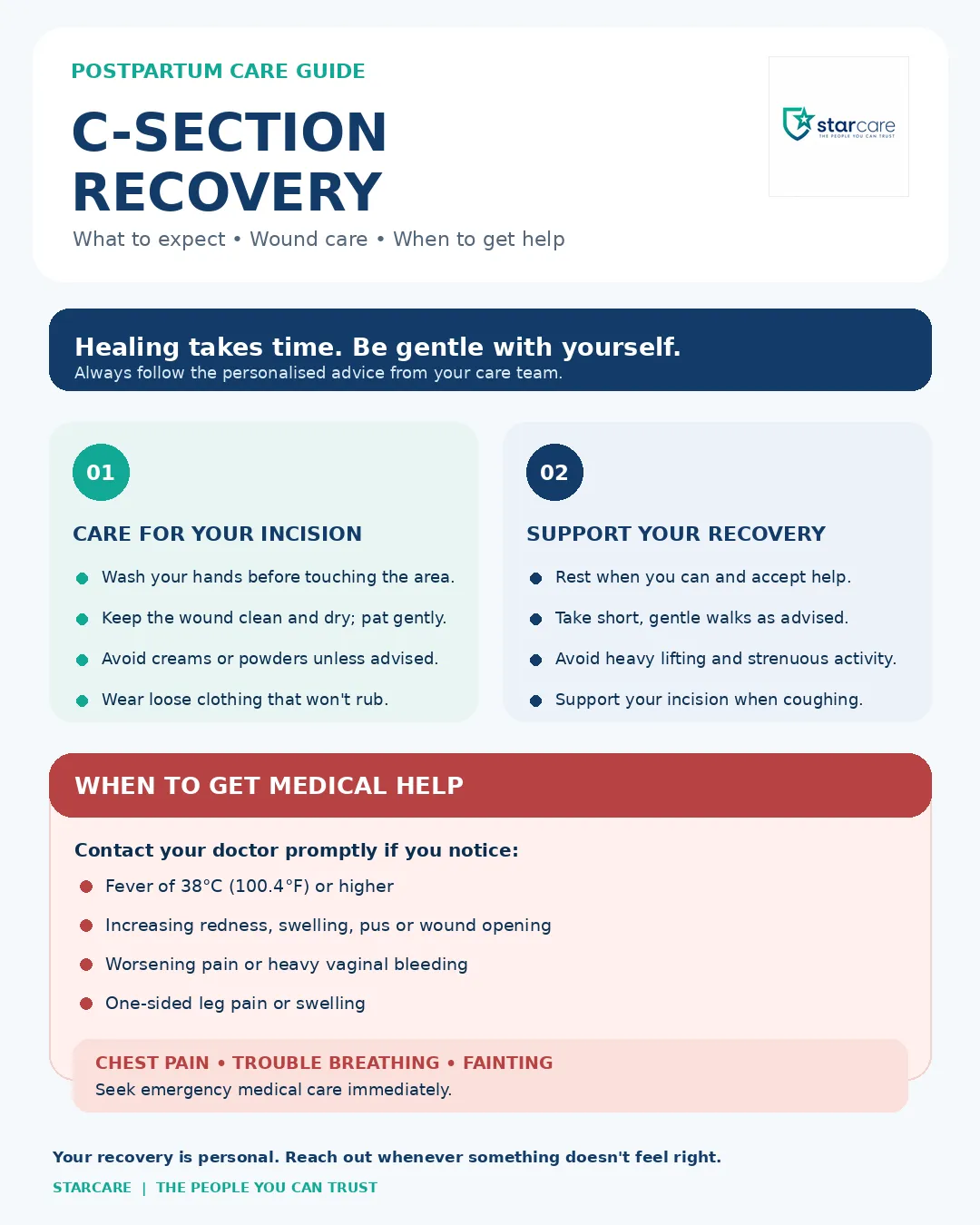
Good C-section wound care is one of the most important parts of recovery. Your incision is usually closed with stitches or staples beneath the skin or on the surface, and it may be covered with a dressing. Follow the instructions given by your hospital team, which may include keeping the area clean and dry, checking it daily, and attending any scheduled wound checks.
Gently wash the area with clean water and mild soap when you shower, then pat it dry with a clean towel rather than rubbing. Avoid soaking the wound in baths, swimming pools, or sea water until it has fully healed. Wear loose, breathable clothing that does not rub against the incision, and avoid tight waistbands for the first few weeks. Do not apply creams, powders, or home remedies to the wound unless your doctor advises it, because these can trap moisture or cause irritation.
Look at your incision every day, or ask someone to help you check it. Some tenderness, mild bruising, and a small amount of clear or pinkish discharge can be normal in the early days. Numbness around the scar is also common and often improves over time. However, changes that suggest infection or another complication should be reported promptly.
Signs of Infection and Other Warning Signs
Contact your healthcare provider or go to the nearest emergency facility if you notice any of the following. Increasing redness, warmth, or swelling around the incision. Pus, a foul smell, or discharge that is thick, yellow, or green. The wound opening or separating. Fever, usually 38°C or higher. Pain that becomes worse rather than better, or pain that is not relieved by prescribed medication. Heavy bleeding that soaks a pad within an hour, or large clots. Calf pain or swelling, or shortness of breath, which could indicate a blood clot. Severe headache, blurred vision, or swelling of the face and hands, which may signal a serious pregnancy-related condition. Feelings of hopelessness, persistent low mood, or thoughts of harming yourself or your baby.
Do not wait to see whether these symptoms settle on their own. Early assessment is safer.
Recovery After Caesarean Delivery in Lagos: Practical Tips
Recovery after caesarean delivery in Lagos often happens at home with support from family, but the first days can be demanding in a busy household. Plan ahead by arranging help with cooking, cleaning, and older children, and set up a comfortable space for feeding the baby, such as a chair with cushions and a table within reach. Keep water and snacks close by. Breastfeeding in a position that avoids pressure on the incision, such as the side-lying or football hold, can make feeding more comfortable.
Eat a balanced diet with plenty of vegetables, fruit, lean protein, and whole grains. Fibre and fluids help prevent constipation, which is common after surgery and can make the abdomen feel uncomfortable. Ask your doctor before taking any herbal remedies or supplements, since some may interact with medication or affect breastfeeding.
Gentle walking is encouraged, and most women benefit from short walks around the house several times a day. Pelvic floor exercises can usually be started soon after surgery, though your clinician can advise you on timing. Avoid lifting heavy objects, including buckets of water or large bags of shopping, until you have been cleared.
Emotional Wellbeing After a C-Section
Feelings after a caesarean birth vary widely. Some women feel relief, while others feel disappointed, anxious, or grieving for the birth they had hoped for. Tiredness, hormonal changes, and pain can all affect mood. Baby blues are common in the first two weeks, but if sadness, anxiety, or lack of interest lasts longer, or if you feel unable to cope, talk to your doctor or midwife. Postnatal depression is treatable, and asking for help is a sign of strength.
Follow-Up Care at Starcare Hospital
Attending your postnatal checkups is important, even if you feel well. These visits allow your clinician to check your wound, blood pressure, and general recovery, and to discuss contraception and planning for future pregnancies. Starcare Hospital encourages mothers to keep scheduled appointments and to contact the team early if something does not feel right. Bring a list of questions to each visit so you leave with clear answers.
Conclusion
C-section recovery is a gradual process that rewards patience, rest, and careful self-care. Expect your body to take several weeks to recover and longer to regain full strength. Practise good C-section wound care by keeping the incision clean and dry, checking it daily, and reporting any signs of infection. Plan support at home, eat well, move gently, and pay attention to your emotional health. Most importantly, know the warning signs and do not hesitate to seek help. If you are recovering after a caesarean in Lagos and have concerns, Starcare Hospital's team is ready to support you and your baby.
Frequently Asked Questions
How long does C-section recovery time usually take?
Most women feel significantly better within a few weeks, but full recovery of the abdominal muscles and internal tissues can take several months. Your clinician will advise when you can resume normal activities.
When can I start driving after a C-section?
Driving is usually restricted until you can brake suddenly and move comfortably without pain, and until your doctor has cleared you. Many women wait several weeks, but follow your surgeon's advice.
How do I know if my C-section wound is infected?
Signs of infection include increasing redness, warmth, swelling, pus or foul-smelling discharge, opening of the wound, and fever. Contact your healthcare provider promptly if you notice any of these.
Can I bath or shower after a C-section?
Showering is usually allowed once your team confirms it is safe. Avoid baths, swimming, and soaking the wound until it has healed.
Is it normal to have numbness around the scar?
Yes. Numbness or altered sensation around the incision is common and often improves gradually over months.
When can I start exercising after a caesarean delivery?
Gentle walking can begin early. Core and strenuous exercise should wait until your clinician has checked your recovery, which is often around six weeks or later.
Can I breastfeed after a C-section?
Most mothers can breastfeed after a C-section. Choose positions that avoid pressure on the incision, and ask your midwife or doctor for support if feeding is painful.
When should I go to the hospital after a C-section?
Seek urgent care for heavy bleeding, fever, severe pain, signs of wound infection, calf pain or swelling, shortness of breath, severe headache, or any thoughts of harming yourself or your baby.
News & Updates...

Piles are common and very treatable, yet many people delay seeking help. Learn the symptoms and causes, when to see a doctor, and the options in Lagos, from home care to surgery.
Sickle cell disease affects families across Nigeria, and early testing and consistent care make a real difference. Learn about genotype testing and counselling, how crises are treated in Lagos, and how to live well with the condition.