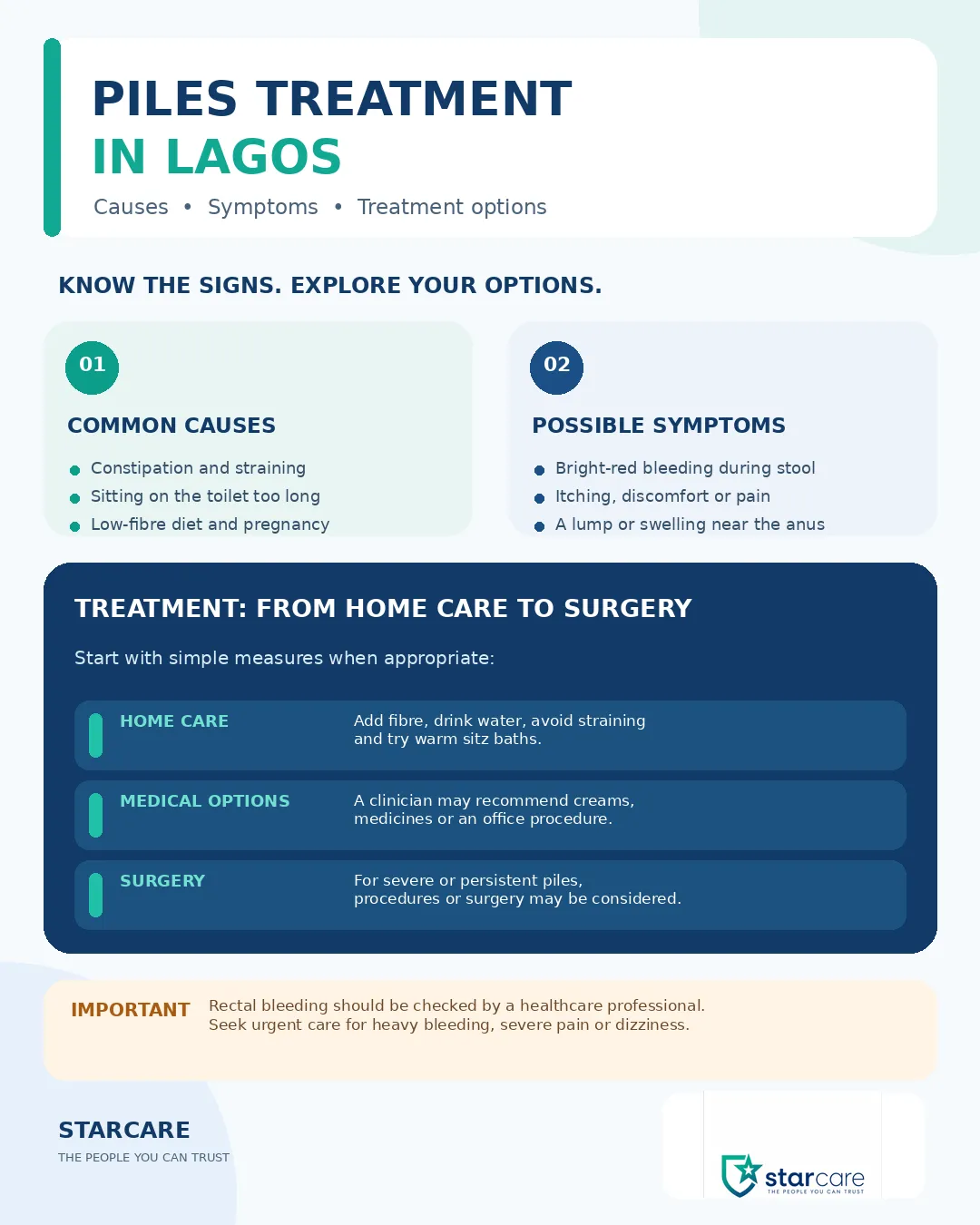
Piles Treatment in Lagos: Causes, Symptoms, and Options from Home Care to Surgery
Piles are common and very treatable, yet many people delay seeking help. Learn the symptoms and causes, when to see a doctor, and the options in Lagos, from home care to surgery.
Piles are one of the most common conditions affecting the lower bowel, yet many people in Lagos suffer for months before speaking to a doctor. Embarrassment, the belief that the problem will pass on its own, and reliance on unproven remedies all contribute to delay. The good news is that piles respond well to treatment, and most people can find relief without surgery. This guide explains the piles symptoms and causes, when to see a doctor, the range of piles treatment in Lagos available today, and when piles surgery in Lagos may be recommended. At Starcare Hospital, our clinicians aim to give patients clear, practical information so they can make confident decisions about their care.
What Are Piles?
Piles, also known as haemorrhoids or hemorrhoids, are swollen blood vessels in and around the lower part of the anus and rectum. Everyone has these vessels, and they help with continence by cushioning the anal canal. Problems begin when these cushions become enlarged, inflamed, or displaced. Internal piles develop inside the rectum and are often painless but may bleed. External piles develop under the skin around the anus and can be painful, particularly if a blood clot forms inside them.
Piles Symptoms and Causes
Understanding the piles symptoms and causes helps you recognise the problem early and reduce the chance of it returning.
Common symptoms include:
Bright red blood on toilet paper or in the toilet bowl after passing stool
Itching or irritation around the anus
Pain or discomfort, especially when sitting or during bowel movements
A soft lump near the anus that may be pushed back in or may protrude
A feeling that the bowel has not fully emptied
Leakage of mucus, which can cause soiling
Causes and risk factors include:
Straining during bowel movements, often linked to constipation or a low-fibre diet
Prolonged sitting on the toilet or at a desk, which increases pressure in the pelvic veins
Pregnancy and childbirth, because the growing uterus and hormonal changes increase pressure in the pelvis
Chronic diarrhoea or frequent constipation, both of which irritate the anal area
Heavy lifting, which raises abdominal pressure
Obesity, which increases pressure on the pelvic veins
Ageing, since the supporting tissues of the anal canal weaken over time
Many Nigerians eat diets low in fibre, which contributes significantly to straining and constipation. Making dietary changes is often the first and most important step in managing piles.
When to See a Doctor
Rectal bleeding should always be checked by a healthcare professional, even if you believe piles are the cause. Bleeding can also be a sign of other conditions, including anal fissures, inflammatory bowel disease, or, less commonly, bowel cancer. A doctor can examine you, confirm the diagnosis, and rule out more serious problems.
See a doctor promptly if you notice blood that does not settle within a week, pain that is severe or getting worse, a lump that cannot be pushed back, a change in bowel habits lasting more than a few weeks, unexplained weight loss, or symptoms that interfere with daily life.
Home Care and Lifestyle Measures
Mild piles often improve with simple changes. Increase your fibre intake through vegetables, fruits, beans, whole grains, and foods such as ugu, okra, and pawpaw, and drink plenty of water. Fibre softens stool and reduces straining. Avoid sitting on the toilet for long periods, and do not strain when passing stool. Stay physically active, since regular movement helps keep bowel habits regular. Warm sitz baths for ten to fifteen minutes, several times a day, can ease discomfort. Over-the-counter creams or suppositories may relieve itching and swelling for a short time, but they should not be used long term without medical advice.
These measures are helpful, but they do not always cure piles, particularly if the problem has been present for some time. If symptoms continue despite lifestyle changes, medical treatment is the next step.
Piles Treatment in Lagos: Medical and Non-Surgical Options
Piles treatment in Lagos depends on the type and grade of piles, how severe the symptoms are, and the patient's overall health. A clinician will usually begin with the least invasive option that is likely to help.
Medications may be prescribed to soften stool, reduce inflammation, relieve pain, or treat infection. Your doctor may recommend specific creams or suppositories for short-term use, along with advice on stool softeners.
For internal piles that bleed or prolapse, several office-based procedures are available. Rubber band ligation involves placing a small band around the base of the pile so it shrivels and falls off over several days. Sclerotherapy involves injecting a solution to shrink the tissue. Infrared coagulation uses heat to seal the blood vessel. These procedures are generally quick and carry lower risk than surgery, though they are not suitable for everyone and may need repeating.
At Starcare Hospital, clinicians assess each patient individually and explain the options, expected benefits, and possible side effects before any procedure. Patients are encouraged to ask questions so they feel informed and comfortable with their treatment plan.
Piles Surgery in Lagos: When Is It Needed?
Piles surgery in Lagos is usually recommended when non-surgical treatments have not worked, when piles are large or have prolapsed repeatedly, or when there are complications such as a thrombosed external pile. Surgery is effective and can provide long-lasting relief, but like all procedures it carries risks, including pain, bleeding, infection, and, rarely, changes in bowel control.
The most common operations include haemorrhoidectomy, which removes the excess tissue, and stapled haemorrhoidopexy, which repositions the tissue and reduces blood supply to the prolapsed piles. Your surgeon will explain which procedure is most appropriate, what recovery involves, and how long you may need time off work. Most people can go home the same day or after a short stay, and many return to normal activities within a few weeks. Following a high-fibre diet and drinking plenty of fluids after surgery helps protect the healing area by keeping stool soft.
Surgery is a serious decision, and it is rarely the first option. Starcare Hospital's team discusses surgery only when it offers a clear benefit over other treatments.
Preventing Piles from Returning
Piles can recur, particularly if the underlying causes are not addressed. Keep a high-fibre diet, drink enough water, avoid straining, limit time spent on the toilet, and take breaks from sitting if your work involves long hours at a desk. Maintain a healthy weight and seek treatment early for constipation or diarrhoea. Regular exercise supports bowel health and circulation. If you notice recurring symptoms, speak to your doctor rather than managing them alone.
Conclusion
Piles are common, treatable, and rarely dangerous, but they should never be ignored, especially when there is rectal bleeding. Understanding the piles symptoms and causes helps you act early and reduce the chance of recurrence. Many people find relief through diet, fluids, and simple home care, while others benefit from office procedures or, when necessary, piles surgery in Lagos. If you are searching for effective piles treatment in Lagos, or have been told you may need hemorrhoids treatment in Lagos, Starcare Hospital offers a patient-centred approach that starts with a proper diagnosis and works towards the option that suits you best.
Frequently Asked Questions
What are the most common piles symptoms?
The most common signs are bright red bleeding after bowel movements, itching, pain, and a lump near the anus. Some people also feel that the bowel has not fully emptied.
What causes piles?
Piles are commonly caused by straining during bowel movements, constipation, diarrhoea, prolonged sitting, pregnancy, heavy lifting, obesity, and ageing.
Can piles go away on their own?
Mild piles sometimes improve with fibre, fluids, and lifestyle changes. Persistent or bleeding piles should be assessed by a doctor.
Is rectal bleeding always caused by piles?
Not always. Bleeding can also come from anal fissures, inflammatory bowel disease, or, less commonly, bowel cancer. Any bleeding should be evaluated by a healthcare professional.
What is the first-line piles treatment in Lagos?
Treatment usually starts with dietary changes, increased fluids, stool softeners, and short-term creams or suppositories. Office procedures or surgery are considered if these do not help.
When is piles surgery in Lagos necessary?
Surgery is usually considered when non-surgical treatments have failed, piles are large or repeatedly prolapse, or complications develop. Your doctor will explain whether it is appropriate for you.
How long does recovery take after piles surgery?
Recovery varies by procedure. Many people go home the same day or after a short stay and return to normal activities within a few weeks, following their surgeon's advice on diet and activity.
Can piles come back after treatment?
Yes, piles can recur, especially if constipation, straining, or prolonged sitting continue. Long-term fibre intake, good fluid intake, and healthy bowel habits help reduce the risk.
News & Updates...

A C-section is major surgery, and recovery takes time and care. Learn what to expect week by week, how to look after your wound, and the warning signs that mean you should get help.
Sickle cell disease affects families across Nigeria, and early testing and consistent care make a real difference. Learn about genotype testing and counselling, how crises are treated in Lagos, and how to live well with the condition.