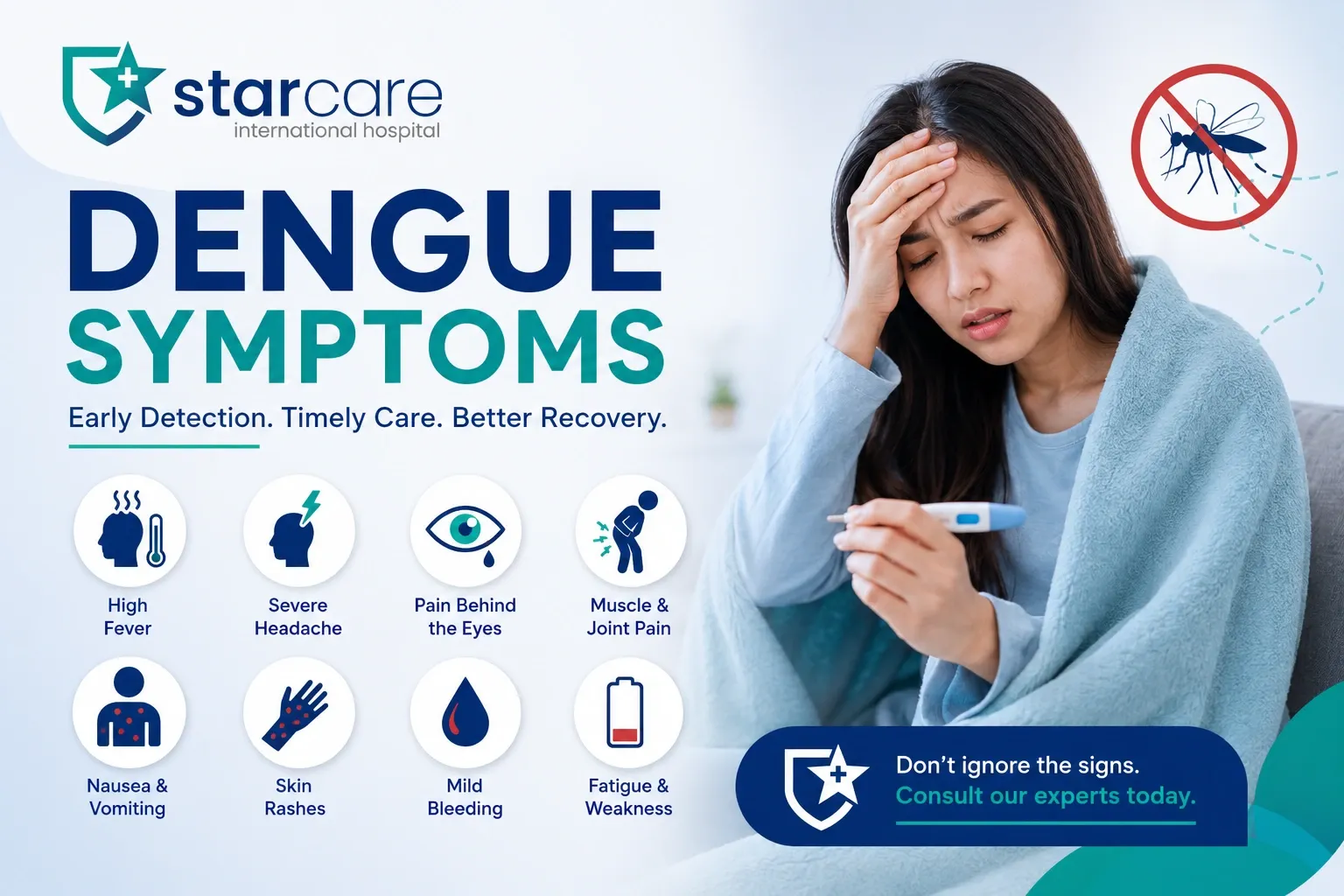
Dengue Symptoms: Early Signs, Causes, Diagnosis, and Treatment of Fever
Dengue fever is a mosquito-borne viral illness that can range from mild to life-threatening if not caught early. This guide covers the dengue fever definition, common causes and risk factors, early symptoms like high fever, headache, and body pain, plus warning signs of severe dengue that need urgent care. It also explains how doctors diagnose dengue, why the treatment of fever centers on hydration and monitoring rather than antivirals, and offers practical tips for home recovery and mosquito-bite prevention. The post closes with guidance on when to seek hospital care and how Starcare Hospital supports patients through diagnosis and recovery.
Dengue is one of the most common mosquito-borne viral infections affecting millions of people every year, especially in tropical and subtropical regions. Recognising dengue symptoms early is essential because timely medical care can prevent serious complications and improve recovery.
At Starcare Hospital, our experienced physicians provide comprehensive diagnosis, monitoring, and treatment for dengue fever using evidence-based medical practices. Whether you experience mild symptoms or severe illness, our multidisciplinary team is committed to delivering high-quality care.
Dengue Fever Definition
The dengue fever definition refers to a viral infection caused by the dengue virus, which is transmitted through the bite of an infected Aedes aegypti mosquito. There are four different dengue virus serotypes, and infection with one type does not provide lifelong protection against the others.
Most patients recover within one to two weeks with proper care, but some may develop severe dengue, a life-threatening condition that requires immediate hospitalisation.
What Causes Dengue Fever?
Dengue fever spreads through the bite of infected mosquitoes rather than from person to person. These mosquitoes usually bite during the daytime, particularly in the early morning and late afternoon.
Common risk factors include:
- Living in or traveling to dengue-prone regions
- Standing water around homes
- Poor mosquito control
- Previous dengue infection
- Warm and humid climates
Maintaining clean surroundings and preventing mosquito breeding are the most effective preventive measures.
Dengue Symptoms
Understanding dengue symptoms can help you seek timely medical attention before complications develop.
The most common symptoms include:
- Sudden high fever
- Severe headache
- Pain behind the eyes
- Muscle and joint pain
- Fatigue and weakness
- Skin rash
- Nausea and vomiting
- Mild bleeding from gums or nose
- Loss of appetite
These dengue symptoms usually appear four to ten days after being bitten by an infected mosquito.
Warning Signs of Severe Dengue
Seek emergency medical attention right away if you observe:
- Severe abdominal pain
- Persistent vomiting
- Difficulty breathing
- Bleeding from gums or nose
- Blood in stool or vomit
- Extreme weakness
- Cold or clammy skin
- Restlessness or confusion
These symptoms may indicate severe dengue and require urgent hospitalisation.
How is dengue diagnosed?
Doctors diagnose dengue using a combination of clinical examination and laboratory investigations.
Common diagnostic tests include:
- Complete Blood Count (CBC)
- NS1 Antigen Test
- Dengue IgM and IgG Antibody Tests
- Platelet Count Monitoring
- Liver Function Tests
At Starcare Hospital, advanced laboratory facilities enable rapid diagnosis, helping doctors begin appropriate treatment as early as possible.
Treatment of Fever in Dengue
There is currently no specific antiviral medication for dengue fever. Therefore, the primary focus is the treatment of fever, hydration, and close monitoring.
Doctors usually recommend the following:
- Adequate fluid intake
- Oral rehydration solutions
- Rest
- Paracetamol for fever and body pain
- Regular monitoring of platelet count
- Hospital admission if symptoms worsen
Avoid taking aspirin, ibuprofen, or other NSAIDs unless prescribed by your doctor, as these medicines may increase the risk of bleeding.
Proper treatment of fever is essential to improve patient comfort and reduce complications during recovery.
Home Care Tips During Dengue Recovery
Patients recovering from dengue should follow these recommendations:
- Drink plenty of water and electrolyte-rich fluids.
- Eat soft, nutritious meals.
- Get adequate sleep and rest.
- Monitor temperature regularly.
- Attend follow-up appointments.
- Watch for warning signs of severe dengue.
Recovery usually takes one to two weeks, although fatigue may persist slightly longer.
How to Prevent Dengue
The best defence against dengue infection is always prevention.
You can reduce your risk by:
- Eliminating stagnant water around your home
- Using mosquito repellents
- Wearing full-sleeved clothing
- Installing window screens
- Sleeping under mosquito nets when necessary
- Keeping water storage containers covered
Community awareness and mosquito control programs also play an important role in preventing outbreaks.
When Should You Visit a Hospital?
Do not ignore persistent fever, especially if accompanied by multiple dengue symptoms.
Visit Starcare Hospital immediately if:
- Fever lasts more than two days
- You experience bleeding
- Vomiting becomes persistent
- Severe abdominal pain develops
- You become unusually weak or dizzy
- Breathing becomes difficult
Early diagnosis significantly improves recovery outcomes and helps prevent severe complications.
Why Choose Starcare Hospital for Dengue Care?
At Starcare Hospital, patient safety and clinical excellence remain our top priorities.
Our team offers:
- Experienced internal medicine specialists
- Advanced diagnostic laboratory services
- 24/7 emergency care
- Comprehensive inpatient monitoring
- Evidence-based dengue management
- Personalized treatment plans
Our multidisciplinary approach ensures every patient receives timely diagnosis, expert care, and continuous monitoring throughout recovery.
Conclusion
Recognising dengue symptoms early can make a significant difference in treatment and recovery. Understanding the dengue fever definition, identifying warning signs, and seeking prompt medical attention are essential for preventing severe illness. With proper hydration, timely diagnosis, and appropriate treatment of fever, most patients recover completely.
If you or a loved one develops symptoms suggestive of dengue, consult the experienced medical team at Starcare Hospital for expert evaluation and compassionate care.
Frequently Asked Questions (FAQs)
1. What are the first dengue symptoms?
The earliest dengue symptoms include high fever, headache, body pain, muscle pain, fatigue, and pain behind the eyes.
2. What is the dengue fever definition?
The dengue fever definition is a viral infection transmitted through the bite of infected Aedes mosquitoes that causes fever and flu-like symptoms.
3. What is the best treatment of fever in dengue?
The recommended treatment of fever includes paracetamol, adequate hydration, sufficient rest, and regular medical monitoring. Ibuprofen and aspirin should not be used for self-medication unless prescribed by a physician.
4. How long does dengue fever last?
Most patients recover within one to two weeks, although weakness may continue for a few additional weeks.
5. Can dengue be treated at home?
Mild dengue can often be managed at home with medical supervision, hydration, and rest. Severe symptoms require immediate hospitalisation.
6. When should I visit Starcare Hospital?
You should visit Starcare Hospital immediately if you experience persistent high fever, severe abdominal pain, bleeding, breathing difficulty, persistent vomiting, or signs of dehydration.
News & Updates...

Children experience a range of common health concerns, from fevers and respiratory infections to stomach problems, allergies, and developmental challenges. Knowing which symptoms are normal and which require prompt medical attention is an important part of keeping your child healthy. This blog explores common childhood illnesses, warning signs that may require emergency care, and the importance of age-appropriate examinations, weight-based medication dosing, immunisations, growth monitoring, and developmental assessments. Discover how Starcare Hospital's pediatric services focus on family-centred care, careful diagnosis, preventive health, and timely treatment to support children through every stage of development.
Finding the best hospital in Ikeja for your family isn't just about choosing the closest facility. It's about finding a healthcare provider that offers qualified doctors, reliable emergency services, transparent billing, and care tailored to your family's needs. This blog explores the key factors to consider when choosing a hospital in Ikeja, including HEFAMAA registration, MDCN-registered consultants, specialist departments, on-site diagnostics, HMO coverage, and genuine 24-hour emergency capabilities. Discover how Starcare Hospital focuses on consultant-led care, patient safety, transparent pricing, and consistent healthcare services to support families in Ikeja and across Lagos.