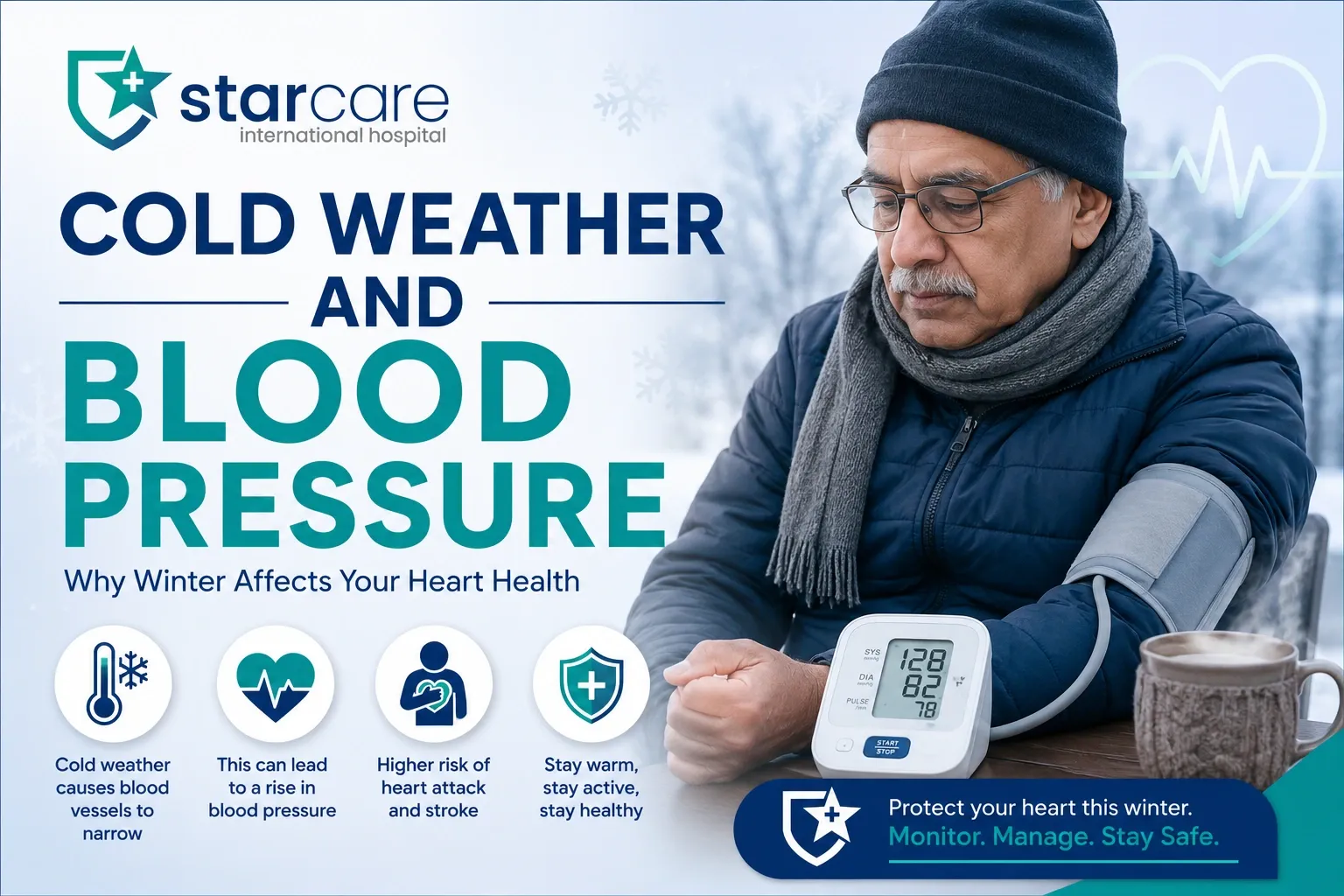
Cold Weather and Blood Pressure: How to Protect Your Heart During Winter
Cold temperatures cause blood vessels to constrict, forcing the heart to work harder and often raising blood pressure — a risk especially for those with hypertension, diabetes, heart disease, or high cholesterol. This guide explains why cold weather affects the cardiovascular system, what symptoms to watch for, and practical ways to reduce cholesterol naturally through diet, exercise, and lifestyle changes. It also outlines when it's time to consult a cardiologist and highlights the preventive and diagnostic heart care services available at Starcare Hospital.
As temperatures drop, your heart has to work harder to keep your body warm. Many people experience changes in cold weather and blood pressure, especially those with hypertension, heart disease, diabetes, or high cholesterol. Understanding these changes can help you take the right precautions and maintain a healthy heart throughout the colder months.
At Starcare Hospital, our experienced cardiologists provide advanced heart care, preventive screenings, and personalised treatment plans to help patients manage cardiovascular conditions effectively. If you've recently searched for cardiologists near me, it's important to choose a hospital with experienced specialists and comprehensive cardiac services.
Why Does Cold Weather Affect Blood Pressure?
The relationship between cold weather and blood pressure is well established. When you're exposed to cold temperatures, your blood vessels naturally narrow (vasoconstriction) to preserve body heat. This narrowing reduces blood flow and forces your heart to pump harder, leading to an increase in blood pressure.
People most at risk include:
- Individuals with hypertension
- Older adults
- People with diabetes
- Heart disease patients
- Smokers
- Individuals with high cholesterol
Because of these changes, heart attacks and strokes tend to occur more frequently during colder seasons.
Common Symptoms to Watch For
An increase in cold weather and blood pressure may not always produce noticeable symptoms. However, some people experience:
- Headaches
- Dizziness
- Chest discomfort
- Shortness of breath
- Fatigue
- Irregular heartbeat
- Blurred vision
In case of persistent symptoms, please reach out to a medical professional.
How Cold Weather Impacts Heart Health
Cold temperatures place extra stress on your cardiovascular system in several ways:
1. Increased Blood Pressure
As blood vessels constrict, blood pressure naturally rises.
2. Higher Oxygen Demand
Your heart must work harder to pump blood through your body.
3. Increased Risk of Blood Clots
Cold weather can make blood thicker, increasing the likelihood of clot formation.
4. Greater Risk for Existing Heart Conditions
People with coronary artery disease may experience worsening symptoms during winter.
This is why regular heart check-ups are especially important during colder months.
How to Reduce Cholesterol Naturally
Managing cholesterol is one of the best ways to protect your heart during every season. If you're wondering how to reduce cholesterol naturally, adopting healthy lifestyle habits can significantly lower your cardiovascular risk.
Eat More Heart-Healthy Foods
Choose foods rich in soluble fiber, including:
- Oats
- Apples
- Lentils
- Beans
- Whole grains
- Leafy green vegetables
These foods help lower LDL ("bad") cholesterol naturally.
Include Healthy Fats
Replace saturated fats with healthier options such as:
- Olive oil
- Avocados
- Almonds
- Walnuts
- Flaxseeds
- Fatty fish
Exercise Regularly
Exercise for a minimum of 150 minutes weekly at a moderate intensity. Walking, cycling, swimming, and yoga all support healthy cholesterol levels and blood pressure.
Maintain a Healthy Weight
Losing even a small amount of excess weight can improve cholesterol levels and blood pressure.
Quit Smoking
Smoking harms the blood vessels and elevates the risk of developing heart disease.
Limit Alcohol
Excessive alcohol consumption contributes to high blood pressure and elevated cholesterol.
Learning how to reduce cholesterol naturally is one of the most effective long-term strategies for preventing cardiovascular disease.
When Should You Visit a Cardiologist?
Many people search online for cardiologists near me only after experiencing chest pain or other concerning symptoms. However, preventive care is equally important.
Consider scheduling an appointment if you have:
- High blood pressure
- High cholesterol
- Diabetes
- Family history of heart disease
- Obesity
- Smoking history
- Chest pain
- Shortness of breath
- Palpitations
At Starcare Hospital, our experienced cardiac specialists use advanced diagnostic technology to detect heart problems early and provide personalized treatment plans.
Preventive Tips During Cold Weather
To minimize the effects of cold weather and blood pressure, follow these practical tips:
- Dress warmly before going outside.
- Stay physically active indoors.
- Drink enough water throughout the day.
- Avoid sudden exposure to extreme cold.
- Continue taking prescribed medications.
- Monitor your blood pressure regularly.
- Eat a heart-healthy diet.
- Reduce stress through meditation or relaxation techniques.
- Get adequate sleep every night.
- Schedule routine heart health check-ups.
Why Choose Starcare Hospital for Cardiac Care?
At Starcare Hospital, we combine experienced cardiologists, advanced diagnostic technology, and patient-centered care to deliver comprehensive cardiovascular services.
Our cardiac care includes:
- Preventive heart screening
- Blood pressure management
- Cholesterol evaluation
- ECG and Echocardiography
- Stress testing
- Cardiac imaging
- Emergency cardiac care
- Lifestyle counseling
Whether you're concerned about cold weather and blood pressure, looking for advice on how to reduce cholesterol naturally, or searching for trusted cardiologists near me, Starcare Hospital is committed to supporting your heart health with evidence-based care.
Frequently Asked Questions (FAQs)
1. Does cold weather increase blood pressure?
Yes. Cold temperatures cause blood vessels to narrow, making the heart work harder. This often leads to higher blood pressure, particularly in people with hypertension.
2. Who is most affected by cold weather and blood pressure changes?
Older adults, individuals with hypertension, diabetes, heart disease, obesity, and high cholesterol are at greater risk.
3. How can I reduce cholesterol naturally?
You can reduce cholesterol naturally by eating high-fiber foods, exercising regularly, maintaining a healthy weight, quitting smoking, limiting alcohol, and choosing healthy fats.
4. When should I search for cardiologists near me?
You should consult a cardiologist if you experience chest pain, persistent high blood pressure, shortness of breath, irregular heartbeat, or have risk factors such as diabetes, high cholesterol, or a family history of heart disease.
5. How often should I check my blood pressure during winter?
People with hypertension should monitor their blood pressure regularly, especially during colder months, and follow their doctor's recommendations.
6. Why choose Starcare Hospital for heart care?
Starcare Hospital offers experienced cardiologists, modern cardiac diagnostics, preventive heart screening, emergency cardiac care, and personalized treatment plans designed to support lifelong heart health.
News & Updates...

Children experience a range of common health concerns, from fevers and respiratory infections to stomach problems, allergies, and developmental challenges. Knowing which symptoms are normal and which require prompt medical attention is an important part of keeping your child healthy. This blog explores common childhood illnesses, warning signs that may require emergency care, and the importance of age-appropriate examinations, weight-based medication dosing, immunisations, growth monitoring, and developmental assessments. Discover how Starcare Hospital's pediatric services focus on family-centred care, careful diagnosis, preventive health, and timely treatment to support children through every stage of development.
Finding the best hospital in Ikeja for your family isn't just about choosing the closest facility. It's about finding a healthcare provider that offers qualified doctors, reliable emergency services, transparent billing, and care tailored to your family's needs. This blog explores the key factors to consider when choosing a hospital in Ikeja, including HEFAMAA registration, MDCN-registered consultants, specialist departments, on-site diagnostics, HMO coverage, and genuine 24-hour emergency capabilities. Discover how Starcare Hospital focuses on consultant-led care, patient safety, transparent pricing, and consistent healthcare services to support families in Ikeja and across Lagos.