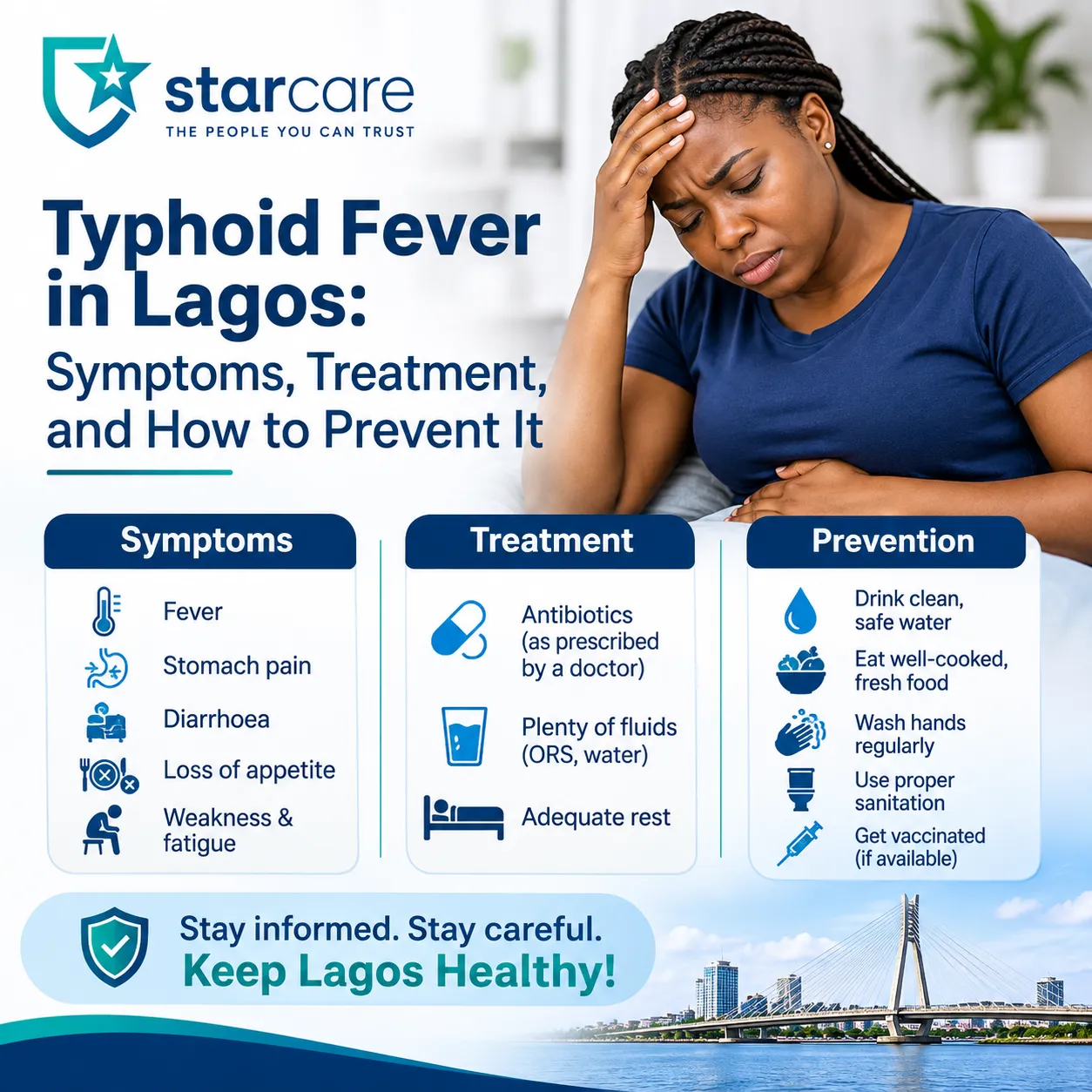
Typhoid Fever in Lagos: Symptoms, Treatment, and How to Prevent It
Typhoid fever, caused by Salmonella Typhi in contaminated food and water, remains a persistent health risk in Lagos. It typically brings prolonged fever, headache, stomach pain, and fatigue, and is treated with prescribed antibiotics and rest. Safe drinking water, good hygiene, careful food handling, and vaccination are the best ways to prevent it.
Typhoid fever is a serious bacterial infection that remains a real concern for families in Lagos. The city's dense population, seasonal flooding, and busy street food culture all create conditions where the disease can spread. At Starcare Hospital, we see patients who wait too long to seek care because early symptoms look like ordinary fatigue or malaria. This guide explains what typhoid fever is, how to recognise it, how it is treated, and how you can protect yourself and your household.
What Is Typhoid Fever?
Typhoid fever is caused by the bacterium Salmonella Typhi. It spreads mainly through food or water contaminated with the faeces or urine of an infected person. Poor hygiene, unsafe drinking water, and contaminated food sold without proper handling all increase the risk. Because the infection can also be carried by people who look healthy, transmission can happen even when no one around you appears sick.
Typhoid Fever Symptoms to Watch For
The typical typhoid fever symptoms develop gradually, usually over one to two weeks after exposure. The early signs are easy to dismiss, which is why many people delay care. Watch for:
A fever that rises slowly day by day and stays high
Persistent headache and general body weakness
Loss of appetite and unexplained weight loss
Abdominal pain or discomfort
Constipation or, in some cases, diarrhoea
Flat, rose-coloured spots on the chest or abdomen
An enlarged spleen or liver, which a clinician can detect on examination
Symptoms can become severe if the infection is left untreated. Complications include intestinal bleeding, intestinal perforation, and confusion. If you have a sustained fever for more than a few days, especially with stomach pain or weakness, see a doctor promptly. Do not wait for symptoms to become dramatic.
Why Typhoid Is Often Misdiagnosed in Lagos
Fever in Lagos has many possible causes, including malaria, respiratory infections, and urinary tract infections. Because these conditions can overlap with typhoid, a proper evaluation matters. Many people take antimalarials and assume the fever is resolved, only to find it returns. A clinical review, along with the right laboratory tests, helps distinguish typhoid from other illnesses.
Blood culture is the most reliable test for confirming typhoid fever. The Widal test is still used in many settings, but it can produce false positives and false negatives, so doctors usually interpret it alongside symptoms and other results. At Starcare Hospital, clinicians consider the full clinical picture rather than relying on a single test result.
Typhoid Fever Treatment: What Actually Works
Typhoid is treated with antibiotics, and the choice of drug depends on local resistance patterns, the patient's age, and how severe the illness is. Commonly used options include azithromycin, ceftriaxone, and, in some cases, other agents guided by culture sensitivity results. Because resistance to some older antibiotics has been reported in many regions, a doctor should choose the treatment rather than the patient picking a medicine from a pharmacy shelf.
Treatment usually also includes:
Oral or intravenous fluids to prevent dehydration, especially if there has been vomiting or diarrhoea
Rest and a soft, easily digested diet while the body recovers
Monitoring for complications such as bleeding or perforation, particularly in the first week
Completing the full antibiotic course, even after you start to feel better
Stopping antibiotics early is one of the most common reasons typhoid returns. Relapse is also possible, so follow-up matters. If you have been treated for typhoid and symptoms come back, contact your doctor. Do not self-medicate with leftover tablets from a previous illness.
Severely ill patients may need hospital admission for intravenous antibiotics and close observation. If you or someone you care for shows signs of confusion, persistent vomiting, black or bloody stools, or a sudden drop in alertness, seek emergency care immediately.
How to Prevent Typhoid Fever
Prevention combines good hygiene, safe food and water, and vaccination where available. Here is how to prevent typhoid fever in daily life in Lagos:
1. Drink safe water. Use water from a treated or verified source. If you are unsure, boil water thoroughly or use a reliable water treatment method before drinking. Avoid ice of unknown origin.
2. Wash your hands properly. Use soap and clean running water, especially after using the toilet, before handling food, and before eating. Hand sanitiser is useful but does not replace washing with soap when hands are visibly dirty.
3. Be careful with street food. Choose vendors who keep their food covered, use clean utensils, and handle money and food separately. Freshly cooked food that is served hot is safer than food left out for hours.
4. Keep food hygienic at home. Wash fruits and vegetables with safe water, cook meat and fish thoroughly, and store leftovers in the refrigerator promptly.
5. Consider vaccination. Typhoid vaccines are available and can reduce your risk, particularly for people who travel, live in high-risk areas, or care for someone with the infection. Ask a healthcare provider whether the vaccine is right for you and your children.
6. Manage sanitation. Proper disposal of waste and clean toilet facilities reduce the spread of the bacteria in the community. Households can support this by keeping toilets clean and reporting blocked drainage to local authorities.
7. Seek care early. Prompt diagnosis protects you and prevents onward transmission. If you have a persistent fever, do not wait for it to pass on its own.
When to See a Doctor
Visit a healthcare provider if you have a fever lasting more than two or three days, especially if it comes with headache, stomach pain, or weakness. Children, pregnant women, older adults, and people with weakened immune systems should be assessed quickly. Starcare Hospital encourages anyone with concerning symptoms to get evaluated rather than managing them at home.
Conclusion
Typhoid fever in Lagos is preventable and treatable, but only when it is recognised early. Know the typhoid fever symptoms, insist on proper testing, complete any prescribed antibiotic course, and take everyday steps to prevent typhoid fever, such as drinking safe water, washing your hands, and choosing food carefully. Protecting your health also protects the people around you. If you suspect typhoid, speak to a qualified clinician at Starcare Hospital as soon as possible.
Frequently Asked Questions
How is typhoid fever spread in Lagos?
Typhoid spreads mainly through contaminated food and water. Poor sanitation, unsafe drinking water, and food handled without proper hygiene are the most common routes of infection.
What are the first typhoid fever symptoms?
Early signs usually include a gradually rising fever, headache, tiredness, and loss of appetite. Stomach discomfort and constipation or diarrhoea may follow.
Can typhoid fever be cured?
Yes. Typhoid is treated with appropriate antibiotics, supportive care, and fluids. Most people recover fully when treatment starts early and the full course is completed.
Is typhoid fever the same as malaria?
No. Both cause fever, but they are caused by different organisms and spread differently. Malaria is transmitted by mosquitoes, while typhoid is spread through contaminated food and water. Testing is needed to tell them apart.
How long does typhoid treatment take?
Treatment duration depends on the antibiotic and the severity of the illness. Your doctor will advise you on the correct length of treatment and follow-up.
Can I take antibiotics I already have at home?
No. Using leftover or incorrect antibiotics can be ineffective and may contribute to resistance. See a doctor for diagnosis and a prescription.
Is there a vaccine for typhoid fever?
Yes. Typhoid vaccines are available and can lower your risk. Speak to a healthcare provider about whether vaccination is suitable for you or your family.
Can typhoid come back after treatment?
Relapse is possible, especially if antibiotics are stopped early. If symptoms return after treatment, contact your doctor promptly.
News & Updates...

A C-section is major surgery, and recovery takes time and care. Learn what to expect week by week, how to look after your wound, and the warning signs that mean you should get help.
Sickle cell disease affects families across Nigeria, and early testing and consistent care make a real difference. Learn about genotype testing and counselling, how crises are treated in Lagos, and how to live well with the condition.