Stroke Warning Signs: How to Recognise a Stroke Early, and What Happens Next
Stroke can change a life in minutes, so knowing the warning signs and acting fast is critical. Learn the FAST test, how stroke is treated in Lagos, who is at risk, and what to do in an emergency.
A stroke can change a person's life in minutes. Recognising stroke warning signs quickly, and getting emergency care without delay, is one of the most effective ways to limit lasting damage. In Nigeria, high blood pressure, diabetes, and untreated heart rhythm problems raise the risk of stroke, and many families in Lagos only realise what is happening after precious time has passed. This guide explains the key signs, the FAST test, the stroke symptoms and treatment options available in Lagos, and what to do in an emergency. At Starcare Hospital, our teams encourage families to act on early warning signs rather than wait to see whether they pass.
What Is a Stroke?
A stroke happens when blood flow to part of the brain is interrupted. This can occur in two main ways. An ischaemic stroke is caused by a blocked blood vessel, usually from a clot. A haemorrhagic stroke happens when a blood vessel in the brain bursts and bleeds. Both types deprive brain cells of oxygen, and brain cells begin to die within minutes. That is why the phrase "time is brain" is used so often by emergency teams.
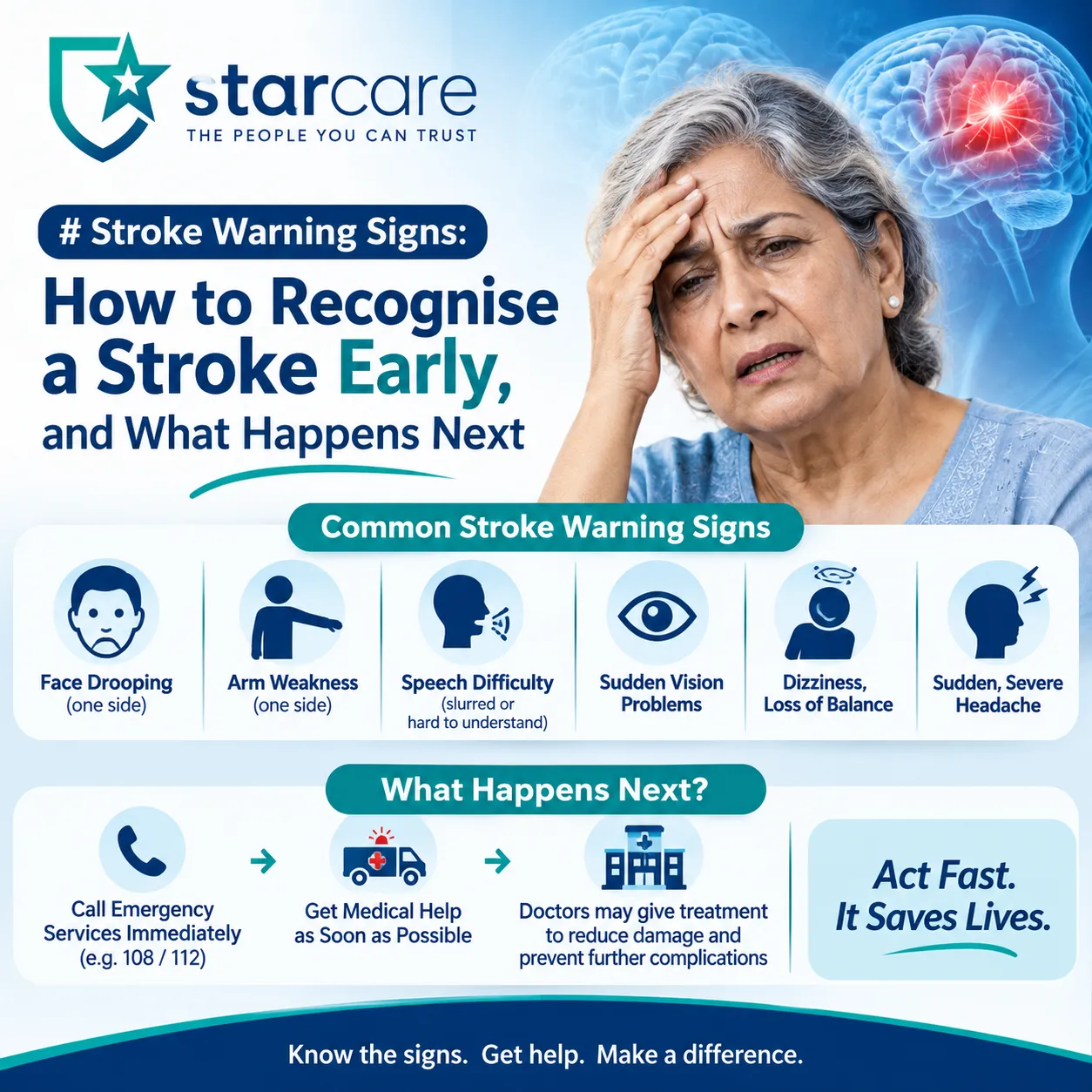
Common Stroke Warning Signs
Stroke warning signs usually appear suddenly, even though some people have a brief episode beforehand. Watch for:
Sudden numbness or weakness in the face, arm, or leg, especially on one side of the body
Sudden confusion or difficulty understanding speech
Sudden trouble seeing in one or both eyes
Sudden difficulty walking, dizziness, or loss of balance
A sudden, severe headache with no known cause
A brief episode of these symptoms that resolves within minutes or hours may be a transient ischaemic attack, sometimes called a "mini-stroke." It is a warning that a larger stroke may follow. Treat it as an emergency, even if the symptoms disappear.
The FAST Stroke Signs Test
The FAST stroke signs test is a simple way to remember the most important symptoms. It is widely used by emergency services and can be taught to anyone in the household.
F: Face. Ask the person to smile. Does one side of the face droop?
A: Arms. Ask them to raise both arms. Does one arm drift downward or feel weak?
S: Speech. Ask them to repeat a simple sentence. Is the speech slurred or strange?
T: Time. If you see any of these signs, call emergency services immediately and note the time symptoms began.
Some guidelines also add B for balance and E for eyes, to capture sudden vision or coordination problems. Whatever version you use, the rule is the same: do not drive the person yourself and do not wait to see whether the symptoms improve.
Stroke Symptoms and Treatment in Lagos
Stroke symptoms and treatment in Lagos depend on how quickly the patient reaches a facility capable of diagnosis and care. The first step is usually a brain scan, typically a CT scan or MRI, to determine whether the stroke is ischaemic or haemorrhagic. This distinction is critical because the treatments are different.
For ischaemic stroke, clot-dissolving medication may be given intravenously if it is started within a limited window after symptoms begin. In selected patients with a large blocked vessel, a procedure called mechanical thrombectomy may remove the clot directly, and eligibility depends on timing and imaging findings. For haemorrhagic stroke, treatment focuses on controlling bleeding, lowering pressure inside the skull, and managing blood pressure. Some patients need surgery.
Whatever the type, stroke care also includes monitoring breathing, swallowing, blood sugar, and blood pressure. Rehabilitation, including physiotherapy, speech therapy, and occupational therapy, is an important part of recovery. Many people regain significant function, but the earlier treatment begins, the better the chances of a good outcome.
Why Speed Matters
Every minute without treatment means more brain cells may be lost. Delays are often caused by hoping symptoms will settle, by traditional remedies, or by transport difficulties. If you notice stroke warning signs, do not give the person food, drink, or medication, since swallowing may be impaired and some medications could be dangerous. Keep them lying with the head slightly raised, note the time symptoms began, and get to emergency care as quickly as possible.
Looking for a Stroke Emergency Hospital in Ikeja
Families searching for a stroke emergency hospital in Ikeja should ask a few practical questions before an emergency arises. Can the facility perform urgent brain imaging? Is there a clear pathway for stroke patients in the emergency department? Are neurology or stroke specialists accessible, and can the hospital admit patients for monitoring and rehabilitation? Knowing the answers in advance can save valuable time. Starcare Hospital's emergency and clinical teams work to assess stroke patients as quickly as possible, and families are encouraged to call ahead where they can so staff can prepare.
Who Is at Higher Risk?
Several factors increase the risk of stroke. These include high blood pressure, diabetes, high cholesterol, smoking, excessive alcohol use, obesity, physical inactivity, and atrial fibrillation, an irregular heart rhythm. Age is also a factor, though strokes can occur at any age. Managing these conditions with regular checkups is one of the most effective ways to lower your risk.
How to Reduce Your Risk of Stroke
Prevention is often more achievable than people expect. Check your blood pressure regularly, since high blood pressure is one of the strongest risk factors for stroke. Take prescribed medication consistently and do not stop it without medical advice. Control blood sugar if you have diabetes, eat a diet lower in salt and processed foods, include more vegetables and fibre, stay active, avoid tobacco, and limit alcohol. If you have an irregular heartbeat, ask your doctor about stroke prevention options. Starcare Hospital recommends that adults in Lagos schedule routine screening for blood pressure, blood sugar, and cholesterol, particularly if there is a family history of heart disease or stroke.
Conclusion
Stroke warning signs are often sudden, and the first few hours matter enormously. Learn the FAST stroke signs, act immediately when they appear, and do not wait for symptoms to pass. Understanding stroke symptoms and treatment in Lagos helps families make faster decisions when it counts. Most importantly, control the risk factors you can influence, such as blood pressure and blood sugar, before a crisis happens. If you or someone you love shows signs of stroke, call emergency services and get to a qualified stroke care team right away. Starcare Hospital is committed to helping patients and families in Lagos recognise the signs early and get the care they need.
Frequently Asked Questions
What are the most common stroke warning signs?
The most common signs are sudden face drooping, arm or leg weakness, slurred or confused speech, vision problems, dizziness or loss of balance, and a sudden severe headache.
What does FAST stand for?
FAST stands for Face, Arms, Speech, and Time. It is a quick way to check for stroke. If any sign is present, call emergency services immediately.
Can a stroke be treated?
Yes. Treatment depends on the type of stroke and how quickly care begins. Options include clot-dissolving medication, mechanical thrombectomy in selected cases, and bleeding control for haemorrhagic stroke, followed by rehabilitation.
What should I do if I think someone is having a stroke?
Call emergency services immediately, note when symptoms started, keep the person lying with the head slightly raised, and avoid giving food, drink, or medication.
Do symptoms that go away mean the danger has passed?
No. Temporary symptoms may signal a transient ischaemic attack, which is a warning of a possible major stroke. Seek urgent medical evaluation even if the symptoms have resolved.
Can young people have a stroke?
Yes. Although the risk rises with age, strokes can happen at any age. Conditions such as high blood pressure, heart rhythm problems, and certain blood disorders can increase risk in younger adults.
How can I lower my risk of stroke?
Control blood pressure, manage diabetes and cholesterol, avoid smoking, limit alcohol, eat a balanced diet, stay physically active, and attend regular health checkups.
Is there a stroke emergency hospital in Ikeja?
Families should confirm the current emergency and stroke capabilities of any facility directly before an emergency. Starcare Hospital can be contacted for information about its emergency services.
News & Updates...

Piles are common and very treatable, yet many people delay seeking help. Learn the symptoms and causes, when to see a doctor, and the options in Lagos, from home care to surgery.
A C-section is major surgery, and recovery takes time and care. Learn what to expect week by week, how to look after your wound, and the warning signs that mean you should get help.