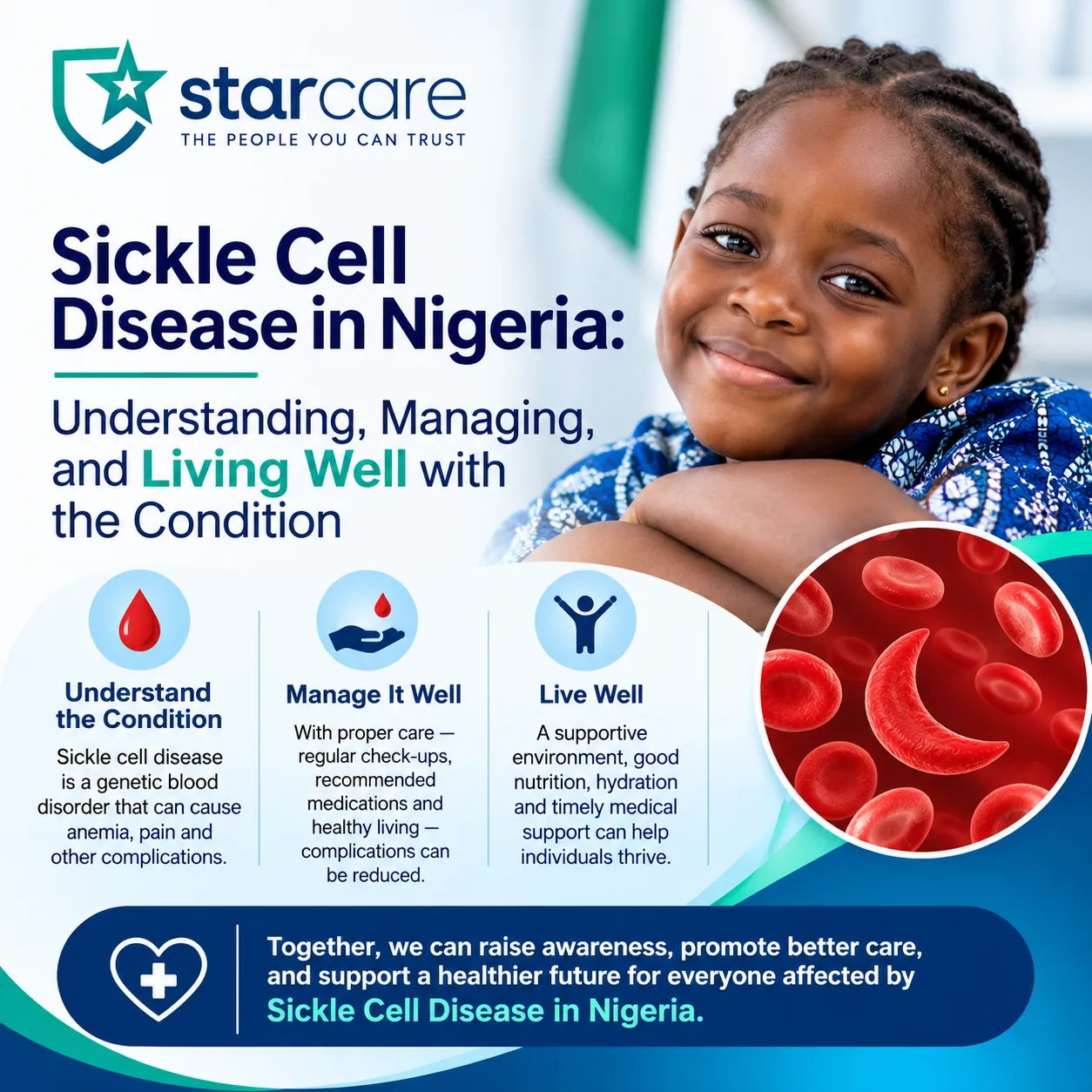
Sickle Cell Disease in Nigeria: Understanding, Managing, and Living Well with the Condition
Sickle cell disease affects families across Nigeria, and early testing and consistent care make a real difference. Learn about genotype testing and counselling, how crises are treated in Lagos, and how to live well with the condition.
Sickle cell disease in Nigeria is one of the most important inherited health conditions in the country. Nigeria has one of the highest numbers of babies born with sickle cell disease in the world, and the condition affects families across every state, including Lagos. Yet awareness remains uneven, and many people only learn their genotype after a child becomes unwell. This guide explains what sickle cell disease is, how it is diagnosed, how crises are managed, and how families can plan for healthier lives. At Starcare Hospital, our teams work with patients and families to encourage early testing, consistent care, and informed decisions.
What Is Sickle Cell Disease?
Sickle cell disease is an inherited blood disorder. It occurs when a person inherits two copies of the abnormal haemoglobin gene, one from each parent. The abnormal haemoglobin causes red blood cells to take on a rigid, sickle or crescent shape. These cells can block small blood vessels, reduce oxygen delivery, and break down faster than normal red cells, leading to anaemia.
The most common form in Nigeria is HbSS, but other genotypes, including HbSC and HbS beta-thalassaemia, also cause sickle cell disease with varying severity. A person with the genotype AS carries the sickle trait. They usually do not have the disease, but they can pass the gene on to their children.
Genotype Test and Counselling in Lagos
Knowing your genotype is the first step toward prevention and good care. A genotype test, usually done with a blood sample, shows whether a person is AA, AS, SS, AC, or another combination. Many hospitals and laboratories in Lagos offer this test, and it is a simple, affordable way to plan for the future.
Genotype test and counselling in Lagos work best together. Counselling helps couples understand what their results mean for their children. For example, if both partners carry the AS genotype, each pregnancy has a one in four chance of a child with SS. Counselling also covers what options are available, such as early testing during pregnancy and planning for care after birth. Starcare Hospital encourages couples, especially those planning marriage or pregnancy, to test early and talk through the results with a trained professional.
Early Signs and Complications
Sickle cell disease often begins in infancy. Parents may notice swelling of the hands and feet, frequent infections, paleness, slow growth, or jaundice. Over time, the condition can lead to painful episodes known as crises, stroke, damage to the spleen and kidneys, lung problems, leg ulcers, and gallstones. Vision problems and delayed growth are also possible. Regular monitoring helps detect complications early, when they are easier to manage.
Sickle Cell Crisis Treatment in Lagos
A sickle cell crisis is a painful episode caused when sickled cells block blood flow. Pain can affect the bones, chest, abdomen, or joints, and it may come on suddenly. Sickle cell crisis treatment in Lagos typically begins with prompt pain relief, with the dose and type of medication guided by a clinician. Oxygen, intravenous fluids, and close monitoring may be needed. Patients should also be assessed for infection, since fever is a serious warning sign in sickle cell disease and requires urgent evaluation.
Some patients need hospital admission for severe pain, chest symptoms, stroke-like features, or signs of infection. Long-term management may include preventive treatments such as hydroxyurea, which can reduce the frequency of crises for suitable patients, along with folic acid supplementation, routine vaccinations, and regular follow-up. Blood transfusion is used in selected cases. Treatment decisions should always be made with a specialist, because the right approach depends on the individual.
Living Well With Sickle Cell Disease
Daily habits make a real difference. Staying well hydrated, avoiding extreme cold where possible, managing stress, and getting enough rest can help reduce the risk of crises. Infections are a major trigger, so keeping routine childhood vaccinations up to date and seeking care for fever quickly are essential. Many families also find that school and workplace planning, along with support groups, makes daily life more manageable.
Mental health matters too. Living with a chronic condition can be exhausting, and children and adults alike may experience anxiety or low mood. Support from family, peers, and healthcare teams can help people cope.
Sickle Cell Care Hospital in Ikeja
Families looking for a sickle cell care hospital in Ikeja should look for a few key features. These include access to haematology or paediatric specialists, a clear plan for managing crises, the ability to run routine blood tests and genotype testing, and counselling services for families. It also helps to find a facility that works with patients over the long term rather than only during emergencies. Starcare Hospital aims to provide coordinated care, from initial diagnosis and counselling through to ongoing monitoring. Families are encouraged to call ahead to confirm which services are available before attending.
Sickle Cell Disease Prevention and Planning
Although sickle cell disease cannot be cured by lifestyle changes alone, its impact can be reduced. Newborn screening, early diagnosis, and routine follow-up all improve outcomes. Couples who know they both carry the sickle trait can use counselling to explore their options. For people living with the condition, bone marrow transplant and gene-based therapies are areas of active research and may be an option for some patients, though availability and suitability vary, and specialist advice is essential.
Conclusion
Sickle cell disease in Nigeria is a serious but manageable condition when it is detected early and cared for consistently. Knowing your genotype, seeking a genotype test and counselling in Lagos before pregnancy, and understanding how sickle cell crisis treatment in Lagos works can help families respond with confidence. Regular follow-up, preventive care, and attention to infections all reduce the risk of complications. If you need a sickle cell care hospital in Ikeja, Starcare Hospital is ready to support you and your family with testing, counselling, and ongoing care.
Frequently Asked Questions
What is the most common type of sickle cell disease in Nigeria?
The most common type is HbSS, in which a person inherits two sickle genes. Other genotypes, such as HbSC, can also cause the disease with varying severity.
What is the difference between sickle cell trait and sickle cell disease?
People with sickle cell trait (genotype AS) usually have no serious symptoms but can pass the gene on. People with sickle cell disease have two abnormal genes and experience ongoing health effects.
How do I get a genotype test in Lagos?
Many hospitals and laboratories in Lagos offer genotype testing through a simple blood test. Contact a facility in advance to confirm availability and cost.
Why is genotype counselling important before marriage or pregnancy?
Counselling explains the chance of having a child with sickle cell disease and the options available. It helps couples make informed decisions and plan for care.
What should I do during a sickle cell crisis?
Seek medical care promptly. Fever, severe pain, breathing difficulty, or swelling should be assessed urgently because they can signal serious complications.
Can sickle cell disease be cured?
Bone marrow transplants can be curative for some patients, and gene-based therapies are being developed. Suitability depends on the individual, so discuss options with a specialist.
How can children with sickle cell disease stay healthy?
Keep vaccinations up to date, take prescribed medications such as folic acid or hydroxyurea as directed, stay hydrated, and seek care quickly for fever or unusual symptoms.
Does sickle cell disease affect life expectancy?
With early diagnosis, preventive care, and consistent management, many people with sickle cell disease live into adulthood and lead full lives. Outcomes vary, and regular specialist follow-up is important.
News & Updates...

Piles are common and very treatable, yet many people delay seeking help. Learn the symptoms and causes, when to see a doctor, and the options in Lagos, from home care to surgery.
A C-section is major surgery, and recovery takes time and care. Learn what to expect week by week, how to look after your wound, and the warning signs that mean you should get help.