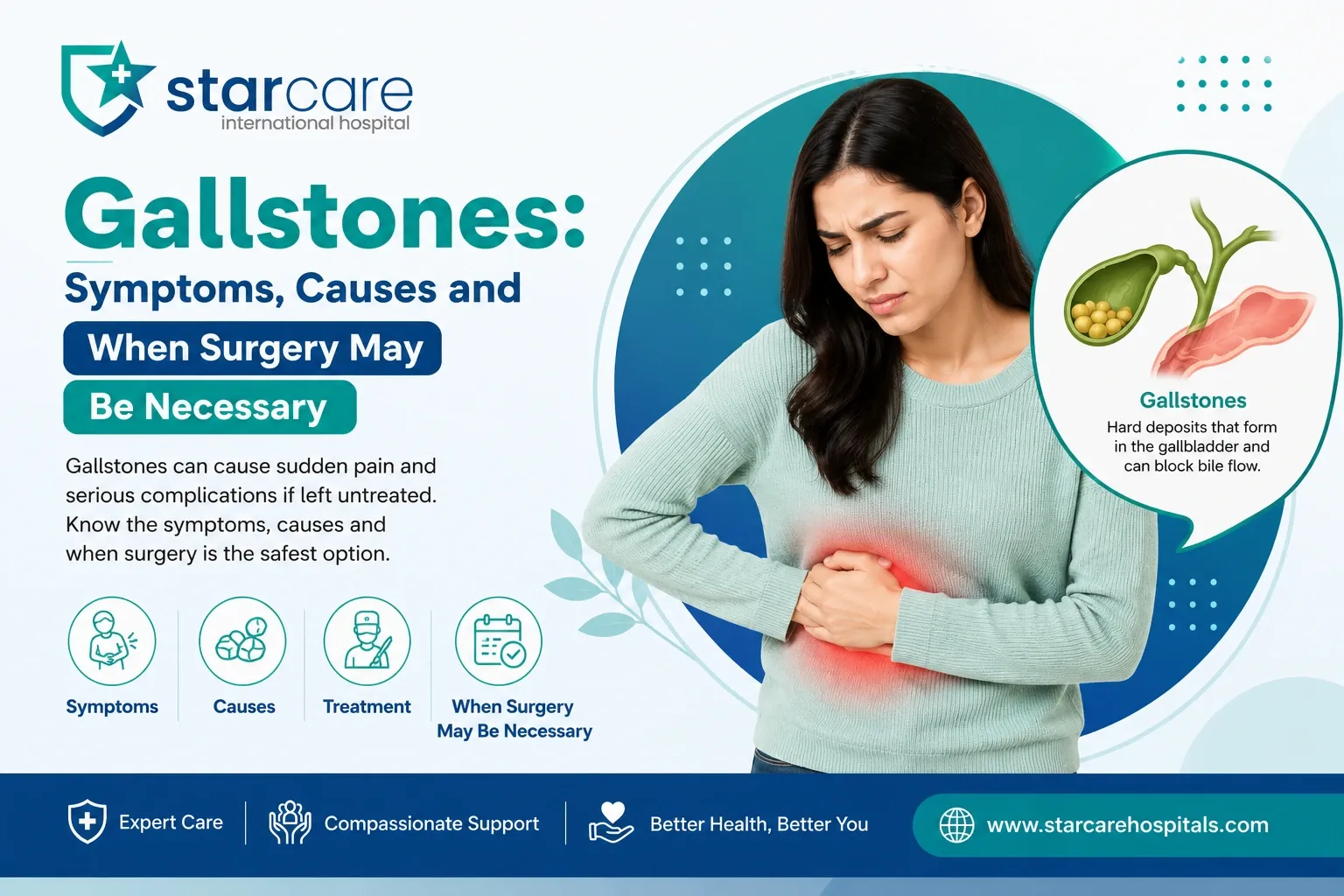
Gallstones: Symptoms, Causes and When Surgery May Be Necessary
Gallstones are hard deposits that form in the gallbladder, a small organ beneath the liver that stores bile. They usually develop when bile holds too much cholesterol or bilirubin, or too few bile salts. Risk rises with being female, being over 40, having a family history, obesity or rapid weight loss, and having diabetes or liver conditions. Most people feel nothing, but a stone that blocks a bile duct can cause upper right abdominal pain, and fever, jaundice or pale stools need prompt review. Doctors usually diagnose stones with an abdominal ultrasound and blood tests. Pain relief and smaller, lower-fat meals help manage attacks, but only gallbladder removal permanently prevents them, and surgery is generally reserved for recurring attacks or complications.
A gallstone is a hard deposit that forms inside the gallbladder, a small organ beneath the liver that stores bile. Many people never notice them, but a stone that blocks the flow of bile can cause sharp pain and serious complications.
Stones like these are common, and they are usually manageable once doctors identify them. This guide explains the main causes, the symptoms that deserve attention, how the condition is diagnosed and when surgery may be necessary. If you have recurrent upper abdominal pain, Starcare Hospital can arrange a proper evaluation.
What Causes Gallstones?
Stones form when bile becomes unbalanced. Bile helps digest fat, but when it holds too much cholesterol or bilirubin, or too few bile salts, it can harden into stones. The NIDDK notes that stones can also form when the gallbladder does not empty fully or often enough. Researchers do not yet fully understand why these bile changes occur.
Cholesterol gallstones
Cholesterol stones are the most common type and usually look yellow-green. They form when bile carries too much cholesterol, or when the gallbladder stays partly full for too long.
Pigment stones
Pigment stones are smaller and darker, made mainly of bilirubin. They are more often linked to liver cirrhosis and chronic blood disorders that break down red blood cells.
Risk factors for gallstones
Several factors make gallstones more likely:
Being female, especially during pregnancy or while taking oestrogen-based medicines
Being over 40
A family history of stones
Obesity, or rapid weight loss through very low-calorie dieting
Diabetes and certain liver conditions
The NIDDK names obesity and certain kinds of dieting as key risk factors, so maintaining a steady, healthy weight matters.
Gallstone Symptoms and Gallstone Pain
Most people with stones feel nothing at all. Trouble usually starts when a stone blocks a duct and triggers a gallbladder attack. Learning the pattern of gallbladder stones symptoms helps you seek care early.
Gallstone pain (biliary colic)
Classic gallstone pain, called biliary colic, sits in the upper right abdomen and sometimes spreads to the back or right shoulder. Attacks often follow heavy meals and tend to strike in the evening or at night. Pain can last several hours, and it usually stops once the stone moves out of the way.
Warning signs of complications
Some symptoms point to infection or blockage rather than a simple attack. Pain lasting several hours, nausea and vomiting, fever or chills, yellowing of the skin or eyes, and tea-coloured urine with pale stools all need prompt medical review. The NIDDK warns that untreated blockages of the bile or pancreatic ducts can be fatal.
How Doctors Diagnose Gallstones
Many stones are discovered by chance during a scan ordered for another problem. A physical examination and an abdominal ultrasound are usually enough to diagnose them, according to Informed Health.
Ultrasound and blood tests
Ultrasound is the standard first test because it shows stones in the gallbladder clearly and safely. Blood tests check liver function and signs of inflammation, which helps your doctor judge whether a blockage has developed.
Tests for stones in the bile ducts
Stones in the bile ducts are harder to see on a standard ultrasound. Endoscopic ultrasound may follow, and ERCP can both locate and remove them, although doctors use it less often. MRCP is an alternative imaging option.
Treatment Options for Gallstones
Stones that cause no problems usually need no treatment. When they do cause attacks, the first goal is relieving pain, although these measures do not permanently prevent future episodes. Informed Health explains the main non-surgical choices below.
Pain relief and medicines
Painkillers and antispasmodic medicines ease colic, and other medicines can treat bloating or nausea. Smaller, lower-fat meals may also reduce the chance of an attack, because heavy fatty food asks the gallbladder to contract hard.
Dissolving stones with tablets
Dissolving tablets exist, but doctors rarely use them. They have limited effect and mainly help small cholesterol stones. Neither tablets nor pain relief permanently prevents colic or complications.
When Surgery May Be Necessary for Gallstones
Gallbladder removal is considered when symptoms keep coming back or when the risk of complications is high. Informed Health notes that removing the gallbladder is the only permanent way to prevent colic and complications.
Symptoms that keep coming back
Repeated attacks are the most common reason for surgery. Doctors also act quickly when gallbladder inflammation, bile duct blockage or pancreatitis develops, because these complications can become dangerous without treatment.
Silent stones and surgery
Between 50% and 70% of people with stones have no related symptoms. A 2014 review from the American Academy of Family Physicians advises against offering surgery for these silent stones. The same review notes that younger patients, people with stones larger than 3 cm, and those with sickle cell disease may benefit from surgery. InformedHealth adds that very large stones or a porcelain gallbladder can raise cancer risk, so surgery may be considered even without symptoms.
What gallbladder removal involves
Laparoscopic, or keyhole, cholecystectomy is the standard operation. The AAFP review reports these complication rates for laparoscopic surgery:
Outcome | Reported rate |
Mortality | 0.14% to 0.5%, depending on age and fitness |
Bleeding | 0.11% to 1.97% |
Abscess | 0.14% to 0.3% |
Bile leak | 0.3% to 0.9% |
Common bile duct injury | 0.26% to 0.6% |
Bowel injury | 0.14% to 0.35% |
These figures come from a 2014 review, so ask your surgeon to explain the current risks for your own health.
When to See a Doctor About Gallstones
Book an appointment after a first episode of upper abdominal pain, and seek care sooner if attacks keep returning, even when you feel well between them. Go to urgent care without delay if any of the warning signs listed above appear.
Starcare Hospital is a practical starting point. A consultation there can review your ultrasound results, explain whether treatment is needed and outline surgical options if symptoms recur. It is also reasonable to ask for a second opinion before agreeing to any operation.
Bring a simple record to your appointment, including when attacks started, what you ate beforehand and how long the pain lasted. This helps your doctor separate a gallbladder attack from other causes of abdominal pain.
Conclusion: Managing Gallstone Disease With Confidence
Gallstone are common, and many never cause trouble. When they do, the pattern of pain and the presence of warning signs guide the next step. Surgery is generally reserved for recurring attacks or complications, so an informed discussion with your doctor is the best way forward.
Starcare Hospital can support that conversation, from initial scans to a clear explanation of treatment options. Early evaluation helps you avoid emergencies and make decisions based on your own health.
Frequently Asked Questions About Gallstones
Do gallstones go away on their own?
Stones rarely dissolve by themselves. The NIDDK notes that attacks usually stop once a stone moves out of the way of the bile ducts, but the stone may remain.
Do all gallstones need surgery?
No. Most gallstones stay silent, and surgery is usually advised only when attacks recur or complications develop. Informed Health describes the same approach.
What foods should I avoid with gallstones?
Heavy, fatty meals often trigger attacks, so smaller, lower-fat meals are a sensible choice. Long gaps between meals can also concentrate bile, so regular eating may help.
Are gallstones dangerous?
Silent stones are usually harmless, but blockages can lead to infection and serious complications. The NIDDK warns that untreated blockages of the bile or pancreatic ducts can be fatal.
News & Updates...

Irregular periods are common, and their causes are often manageable. Stress, illness, a sudden change in routine, or life stages such as puberty, the years after childbirth and perimenopause can all shift a cycle. Persistent changes can also point to PCOS, a thyroid disorder or fibroids, which doctors check through a history, a pregnancy test and blood tests. If your cycle has changed and stayed changed, see a doctor, and Starcare Hospital can arrange the evaluation.
High blood pressure, or hypertension, often starts in the twenties and thirties without warning signs, so it can go unnoticed for years. Lifestyle factors such as weight gain, a high-salt diet, smoking, heavy drinking, inactivity, poor sleep and stress raise the risk, and family history or conditions like kidney disease, thyroid disorders and sleep apnoea can contribute. Untreated, it strains the heart, brain, kidneys and eyes long before symptoms appear. Daily habits can lower it: a vegetable-rich, lower-salt diet, regular aerobic exercise, limited alcohol, quitting tobacco and better sleep. Repeated readings of 130/80 mm Hg or higher warrant a check-up, and very high readings with symptoms need emergency care.